Skip to product information
1 of 8

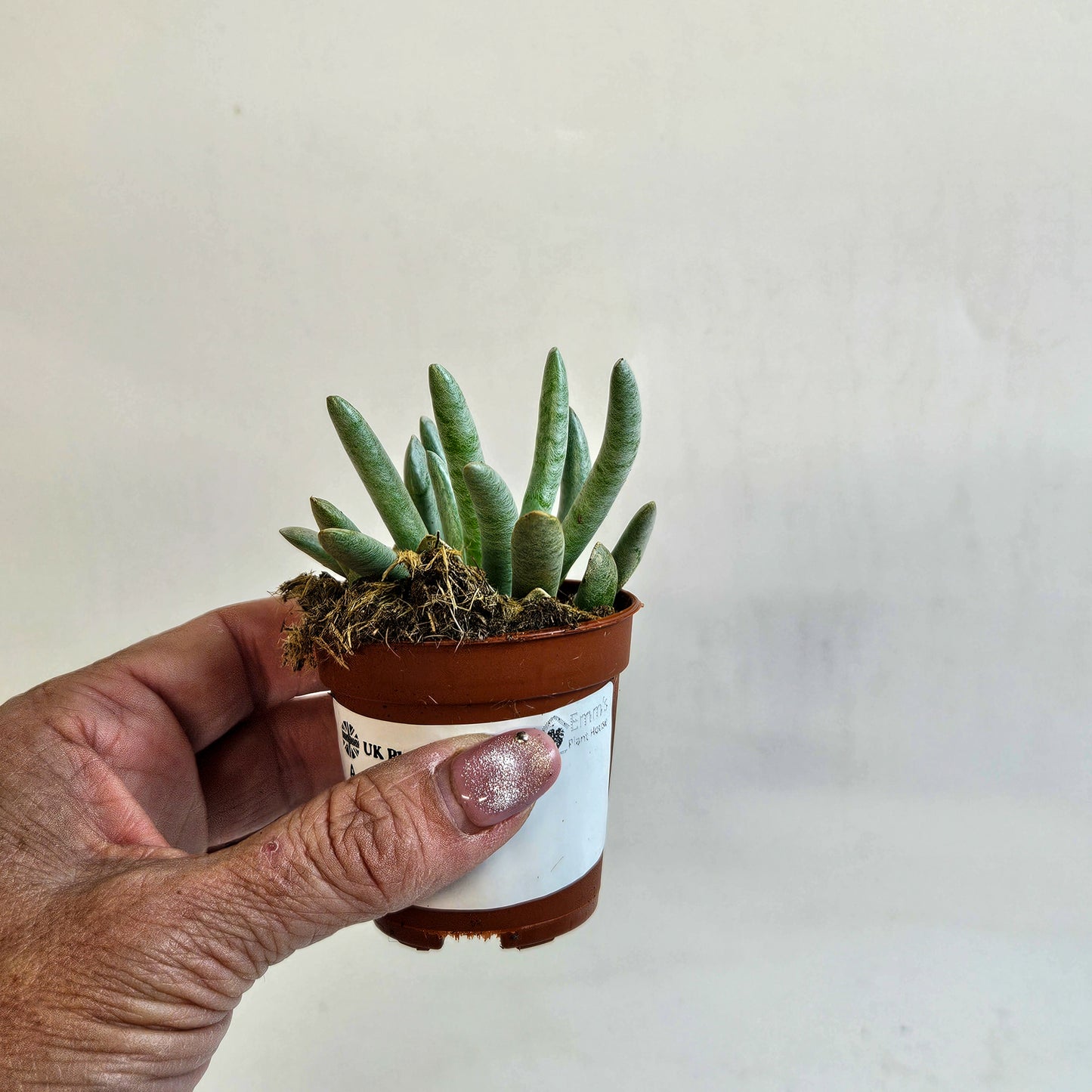
Senecio scaposus 5.5cm H15cm

Senecio scaposus 5.5cm H15cm

Regular price £8.00 GBP
Regular price Sale price £8.00 GBP
Sale Sold out
Taxes included.
Pot Size

Meet Senecio scaposus—the fuzzy silver succulent for bright dry displays. Her pale felted leaves bring a soft silvery texture, giving contrast against darker pots and green succulents. Stylish, unusual and full of character, she is a brilliant choice for adding something special to the plant shelf.

  • The Formal Name: Senecio scaposus
  • The Nickname: Silver Coral Senecio
  • Roots: A southern African succulent adapted to bright, dry environments.
  • Natural Vibe: Bright light, gritty drainage and infrequent watering once established.

Care Guide

  • Care Guide:
  • Sunlight: Give bright light, with some gentle direct sun where possible.
  • Best Room: A sunny windowsill, bright shelf or dry conservatory-style spot suits her well.
  • Snacks: Feed very lightly in spring and summer with cactus or succulent fertiliser.
  • Tropical Feels: Normal household humidity is fine; avoid damp, still air.
  • Cosy Factor: Keep frost-free and avoid cold wet roots.
  • Thirst: Water thoroughly, then allow the mix to dry out well before watering again.
  • Safety First: Not pet-safe – keep away from cats, dogs and children who may chew the leaves or stems.
  • The Bedding: Use a gritty, free-draining cactus and succulent mix.
  • Family Tree: Many succulents root from cuttings, offsets or leaves, depending on the plant.
  • Space Needs: Give good light and avoid crowding so the shape stays compact.
  • Speed: Slow to moderate, with most growth in brighter warmer months.
  • Uninvited Guests: Watch for mealybugs around leaf joints and tight rosettes.
  • Moving Day: Repot only when needed into a pot with excellent drainage.
  • Haircut: Remove damaged stems or fallen leaves to keep the plant tidy.
  • Fresh Air: A low-water choice for bright rooms and sculptural displays.
  • Plant Lore: Succulent leaves store water, which is why overwatering is usually more risky than underwatering.
  • View full details