Skip to product information
1 of 8

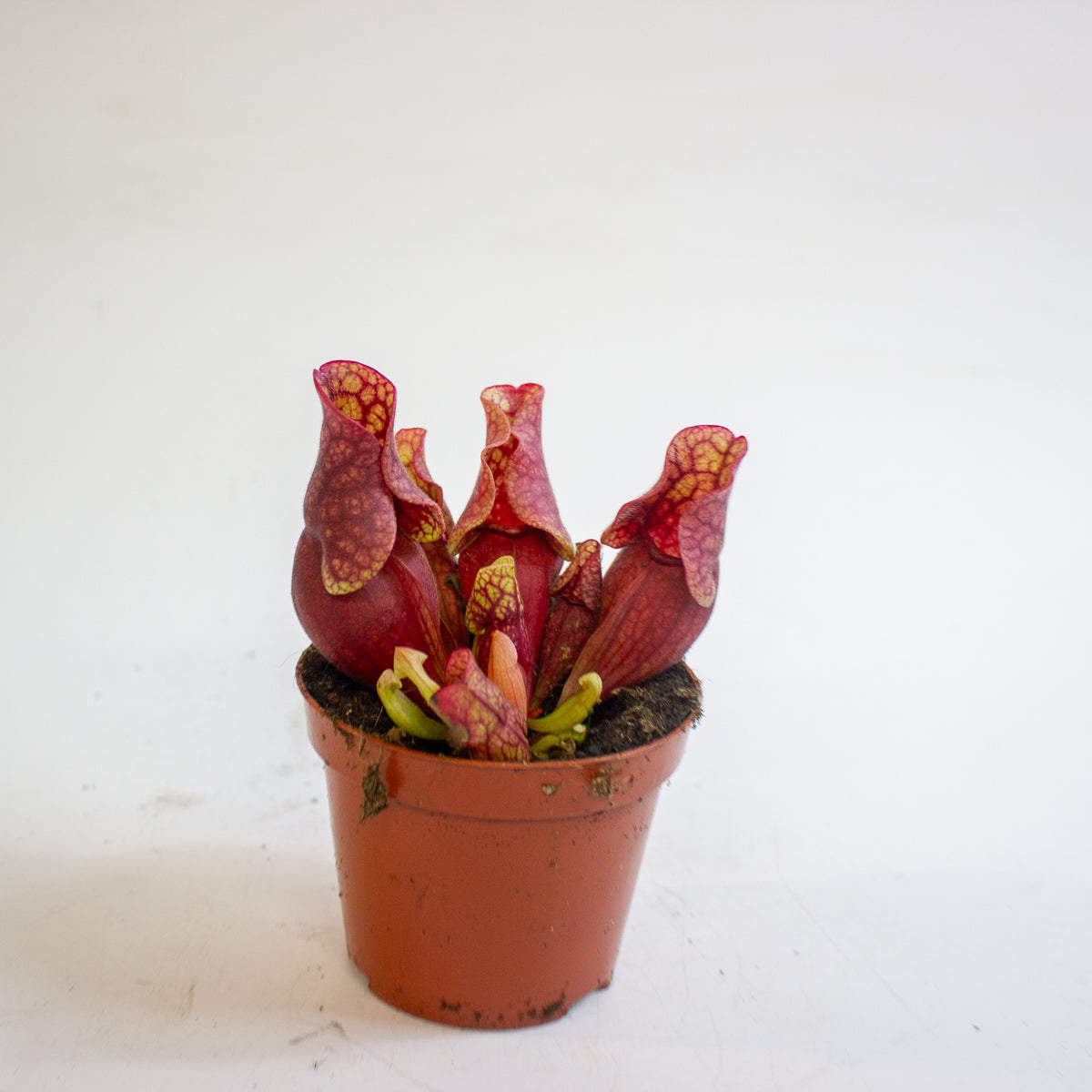
Sarracenia purpurea subsp. venosa 8.5cm H15cm

Sarracenia purpurea subsp. venosa 8.5cm H15cm

Regular price £15.00 GBP
Regular price Sale price £15.00 GBP
Sale Sold out
Taxes included.
Pot Size

Meet Sarracenia purpurea subsp. venosa—the squat purple-veined pitcher plant that wears its insect traps like tiny open cups. Unlike tall trumpet Sarracenia, this form makes low, broad pitchers with strongly veined, open hoods. Bright light deepens its red-purple colouring; mature clumps may produce striking dark-purple flowers.

  • The Formal Name: Sarracenia purpurea subsp. venosa
  • The Nickname: Veined Purple Pitcher Plant
  • Roots: A pitcher plant native to the southeastern United States, where it grows in wet, acidic habitats.
  • Natural Vibe: Sunny bog-garden conditions, clean low-mineral water and a seasonal cool rest.

Care Guide

  • Care Guide:
  • Sunlight: Very bright light or full sun for strong colour, with gradual acclimatisation outdoors.
  • Best Room: Sunny conservatory, cool greenhouse or sheltered outdoor container through the growing season.
  • Snacks: Do not fertilise and do not add food to its pitchers; insect prey is occasional extra nutrition.
  • Tropical Feels: Wet roots and outdoor-quality ventilation are more important than misting leaves.
  • Cosy Factor: Needs a cool winter dormancy; this subspecies tolerates cool conditions but protect small pots in hard freezes.
  • Thirst: Use rainwater or reverse-osmosis water in a shallow tray while actively growing; keep moist but less wet through winter.
  • Safety First: Keep away from pets likely to chew leaves; ingestion safety is not firmly established.
  • The Bedding: Peat-free acidic, low-fertility carnivorous compost with appropriate sustainably sourced moss.
  • Family Tree: Divide a well-established rhizome in spring, retaining roots and growing points.
  • Space Needs: Forms a widening rosette of broad, low pitchers rather than climbing upward.
  • Speed: Fresh pitchers appear in spring/summer; some older pitchers die back in winter.
  • Uninvited Guests: Check new growth for aphids and watch for scale or mealybugs.
  • Moving Day: Refresh specialist compost and divide congested clumps in early spring when necessary.
  • Haircut: Remove completely brown pitchers rather than trimming healthy pitcher rims.
  • Fresh Air: Good ventilation helps reduce rot, especially during cool dormancy.
  • Plant Lore: Rain can collect in the open pitchers; organisms inside help break down trapped insect prey.
  • View full details