Skip to product information
1 of 7

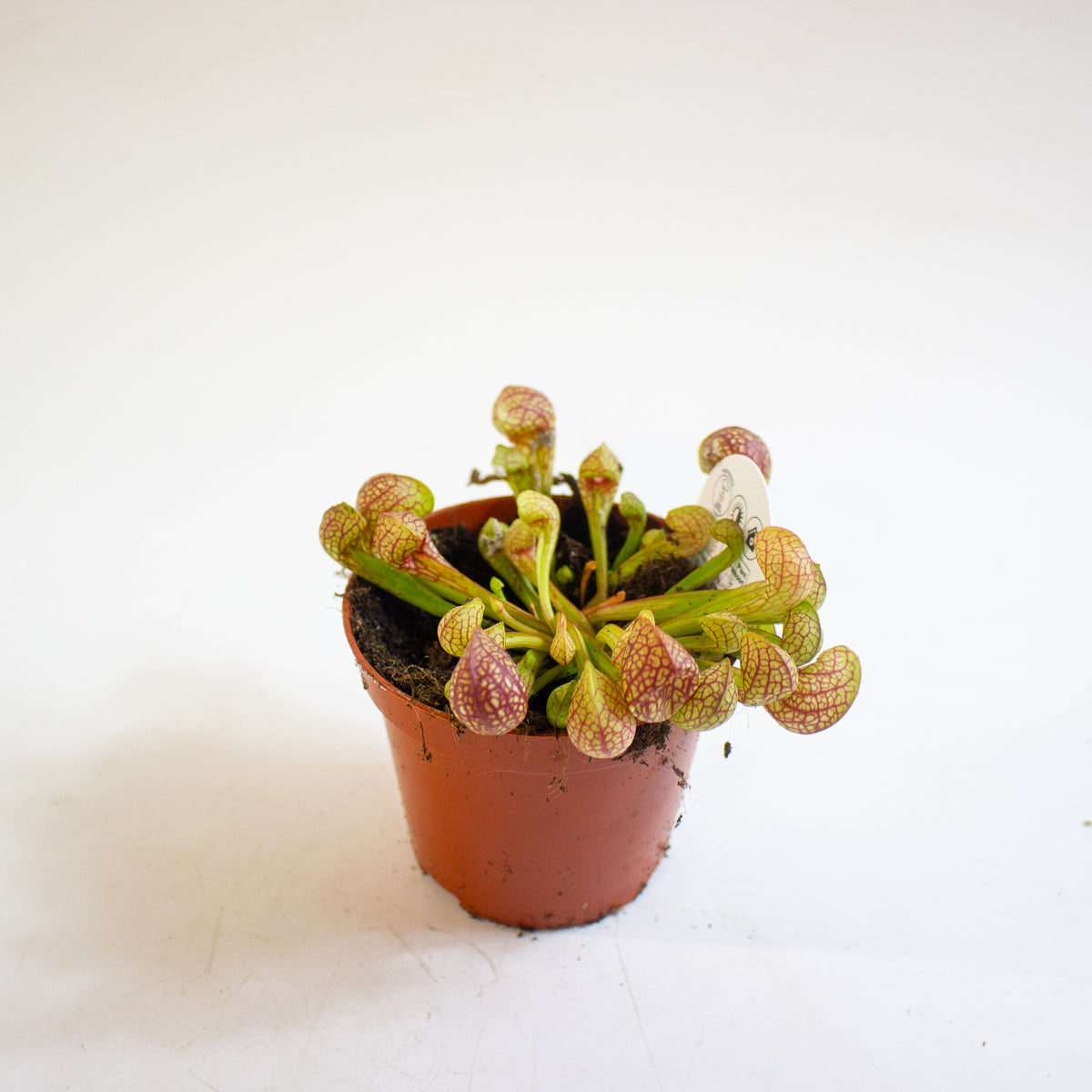
Sarracenia psittacina 8.5cm H18cm

Sarracenia psittacina 8.5cm H18cm

Regular price £16.00 GBP
Regular price Sale price £16.00 GBP
Sale Sold out
Taxes included.
Pot Size

Meet Sarracenia psittacina—the unusual carnivore with low, lobster-pot pitchers. Instead of standing tall like a trumpet, her ground-hugging tubes curl into a rosette with colourful red-green hoods. The trap entrances face inwards like a lobster pot, making this one of the most distinctive Sarracenias to collect.

  • The Formal Name: Sarracenia psittacina
  • The Nickname: Parrot Pitcher Plant
  • Roots: A species from the southeastern United States, found in wet acid bogs and seasonally flooded ground.
  • Natural Vibe: Sunny wetland habitat, rainwater and mineral-poor substrate; unlike tropical Nepenthes she needs a cool seasonal rest.

Care Guide

  • Care Guide:
  • Sunlight: Very bright light or several hours of sunshine when acclimatised, with shelter from brutal heat behind glass.
  • Best Room: Sunny bog garden, bright cool conservatory or sheltered outdoor summer position.
  • Snacks: Do not use normal fertiliser and never add compost nutrients to the traps; insects provide supplementary nutrition.
  • Tropical Feels: Normal outdoor air is suitable when the roots stay wet; a sealed terrarium is not required.
  • Cosy Factor: Give warm bright growing months, then a cool winter dormancy. In UK conditions protect small pots from prolonged hard freezing.
  • Thirst: Keep the specialist mix consistently damp to wet with rainwater, distilled or reverse-osmosis water in spring and summer. In winter reduce standing water but do not allow the rhizome to dry out.
  • Safety First: Carnivorous traps are for insects, not fingers; keep out of the reach of pets and children and never feed with meat.
  • The Bedding: Acidic, nutrient-poor specialist carnivorous medium; use a suitable peat-free bog mix and avoid standard potting soil.
  • Family Tree: Established rhizomes can be divided as growth starts in spring.
  • Space Needs: A low-spreading rosette rather than a tall pitcher tower; provide enough width for developing traps.
  • Speed: New pitchers emerge during warmer months; winter browning or reduced growth can be normal dormancy.
  • Uninvited Guests: Check for aphids, scale and fungal rot in stagnant conditions; remove affected dead pitchers and improve airflow.
  • Moving Day: Repot during dormancy or at the start of spring growth when crowded, using only specialist medium.
  • Haircut: Cut fully brown, spent pitchers carefully without damaging emerging new growth.
  • Fresh Air: Winter ventilation matters as much as cool temperatures; avoid sealed, wet, airless spaces.
  • Plant Lore: The specific name psittacina refers to a parrot-like shape; the supplier misspelling 'Psittachina' has been corrected in the Shopify name and passport.
  • View full details