Skip to product information
1 of 7

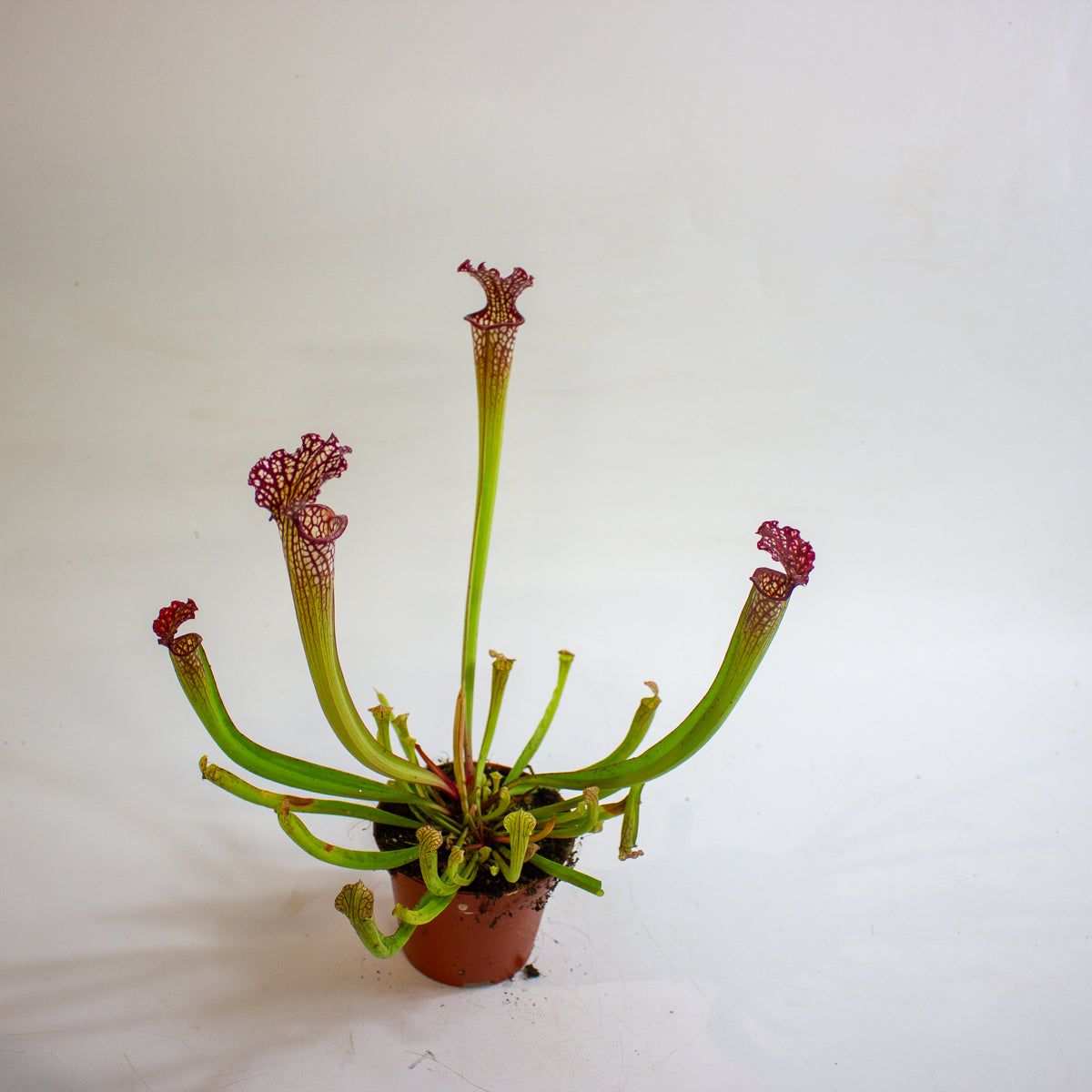
Sarracenia × farnhamii 8.5cm H30cm

Sarracenia × farnhamii 8.5cm H30cm

Regular price £17.00 GBP
Regular price Sale price £17.00 GBP
Sale Sold out
Taxes included.
Pot Size

Meet Sarracenia × farnhamii (horticultural name; also treated as Sarracenia × readei)—the dramatic North American pitcher plant that turns its leaves into living insect traps. Each tall, tubular pitcher is a modified leaf, designed to attract insects towards a slippery opening. Colour and veining intensify in strong light, and the plant rests naturally through winter.

  • The Formal Name: Sarracenia × farnhamii (horticultural name; also treated as Sarracenia × readei)
  • The Nickname: Farnham’s Pitcher Plant
  • Roots: A cultivated Sarracenia hybrid associated with nutrient-poor North American bog habitats.
  • Natural Vibe: Sunny, mineral-poor and permanently moist during growth, followed by a cool winter rest.

Care Guide

  • Care Guide:
  • Sunlight: Plenty of strong sunlight; an outdoor sunny spot from spring to autumn is often better than a dim indoor shelf.
  • Best Room: A very bright conservatory or sheltered outdoor position in the growing season; cool, airy conditions in winter.
  • Snacks: Do not use fertiliser or put food inside the pitchers; it catches insects for itself.
  • Tropical Feels: Consistently damp roots matter more than misting; good airflow helps prevent mould.
  • Cosy Factor: Seasonal plant: allow a cool winter dormancy, protecting container roots from prolonged hard freezing.
  • Thirst: Stand in a shallow saucer of rainwater or distilled/reverse-osmosis water through active growth. In dormancy, keep the mix just damp rather than waterlogged.
  • Safety First: Do not encourage pets to chew pitchers; species-specific pet-safety evidence is limited.
  • The Bedding: Nutrient-poor, acidic specialist carnivorous compost; no ordinary houseplant compost or lime-rich materials.
  • Family Tree: Established clumps can be divided in spring, keeping a growing point and roots with each division.
  • Space Needs: Produces upright pitchers from a rhizome; allow room above the pot for tall leaves.
  • Speed: New pitchers emerge in the growing season; winter dieback is normal.
  • Uninvited Guests: Inspect for aphids, scale and mealybugs; remove affected old growth manually first.
  • Moving Day: Refresh exhausted carnivorous compost in early spring when needed, handling rhizomes gently.
  • Haircut: Snip away fully brown pitchers; leave healthy green tissue working for the plant.
  • Fresh Air: Fresh air and light are helpful, especially during dormancy.
  • Plant Lore: Pitcher plants evolved their traps because their bog soils supply very little nitrogen.
  • View full details