Skip to product information
1 of 7

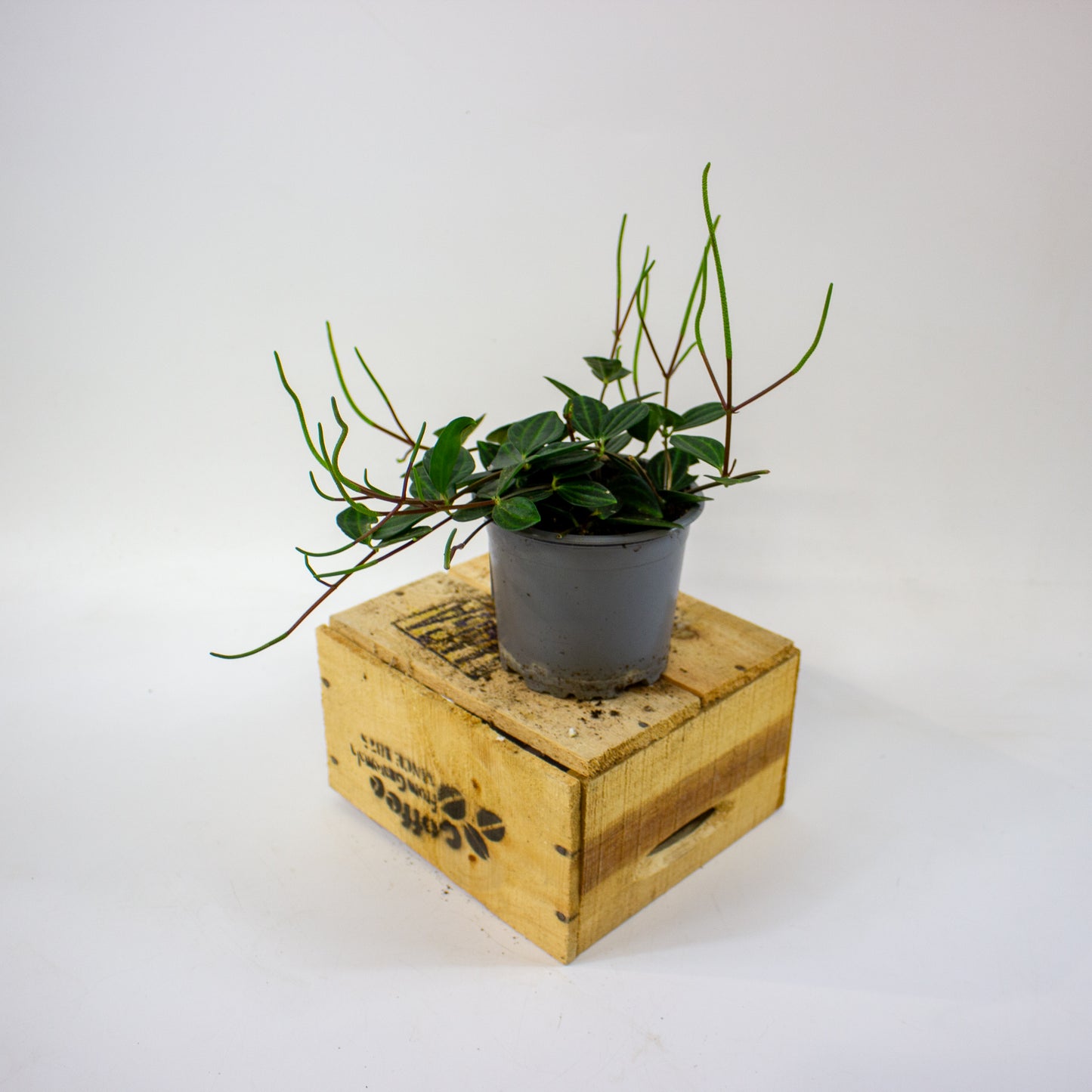
Peperomia angulata Suro 11cm H15cm

Peperomia angulata Suro 11cm H15cm

Regular price £16.00 GBP
Regular price Sale price £16.00 GBP
Sale Sold out
Taxes included.
Pot Size

Meet 'Suro'—the geometric trailing star. With her stiff, succulent leaves featuring striking, dark-green longitudinal stripes, she looks like a designer's dream. She’s a vigorous, hardy vine that brings a touch of vertical pattern and modern edge to any bright space!

  • The Formal Name: Peperomia angulata (syn. P. quadrangularis) 'Suro'
  • The Nickname: Beetle Peperomia or Trailing Beetle
  • Roots: Native to the tropical forests of Panama and South America.
  • Natural Vibe: Creeping through the humid, shaded undergrowth with its uniquely patterned leaves.

Care Guide

  • Care Guide:
  • Sunlight: She loves bright, indirect light. Good light is essential for those sharp, "beetle-like" stripes to pop!
  • Best Room: Hanging high in a sunny kitchen or a bright living room window.
  • Snacks: A balanced liquid feed once a month during spring and summer.
  • Tropical Feels: Handles average home humidity well but loves a misty morning.
  • Cosy Factor: Happy between 18–25°C. Keep her warm and frost-free.
  • Thirst: Let the top half of the soil dry out. She’s semi-succulent and very sensitive to overwatering!
  • Safety First: Non-toxic – safe for your furry friends.
  • The Bedding: A very well-draining mix—think potting soil with plenty of perlite or grit.
  • Family Tree: Incredibly easy to propagate via stem cuttings in water or soil.
  • Space Needs: A trailing vine that can reach 40–60 cm in length.
  • Speed: A steady, moderate grower that fills out a hanging basket beautifully.
  • Uninvited Guests: Watch for mealybugs hiding in the leaf axils.
  • Moving Day: Repot every 2 years into a shallow, airy pot.
  • Haircut: Trim back the vines to encourage a bushier look or to share cuttings!
  • Fresh Air: A beautiful and sturdy natural air-purifying vine.
  • Plant Lore: Often called "Beetle Peperomia" because the leaf pattern mimics the wing cases (elytra) of certain tropical beetles!
  • View full details