Skip to product information
1 of 6

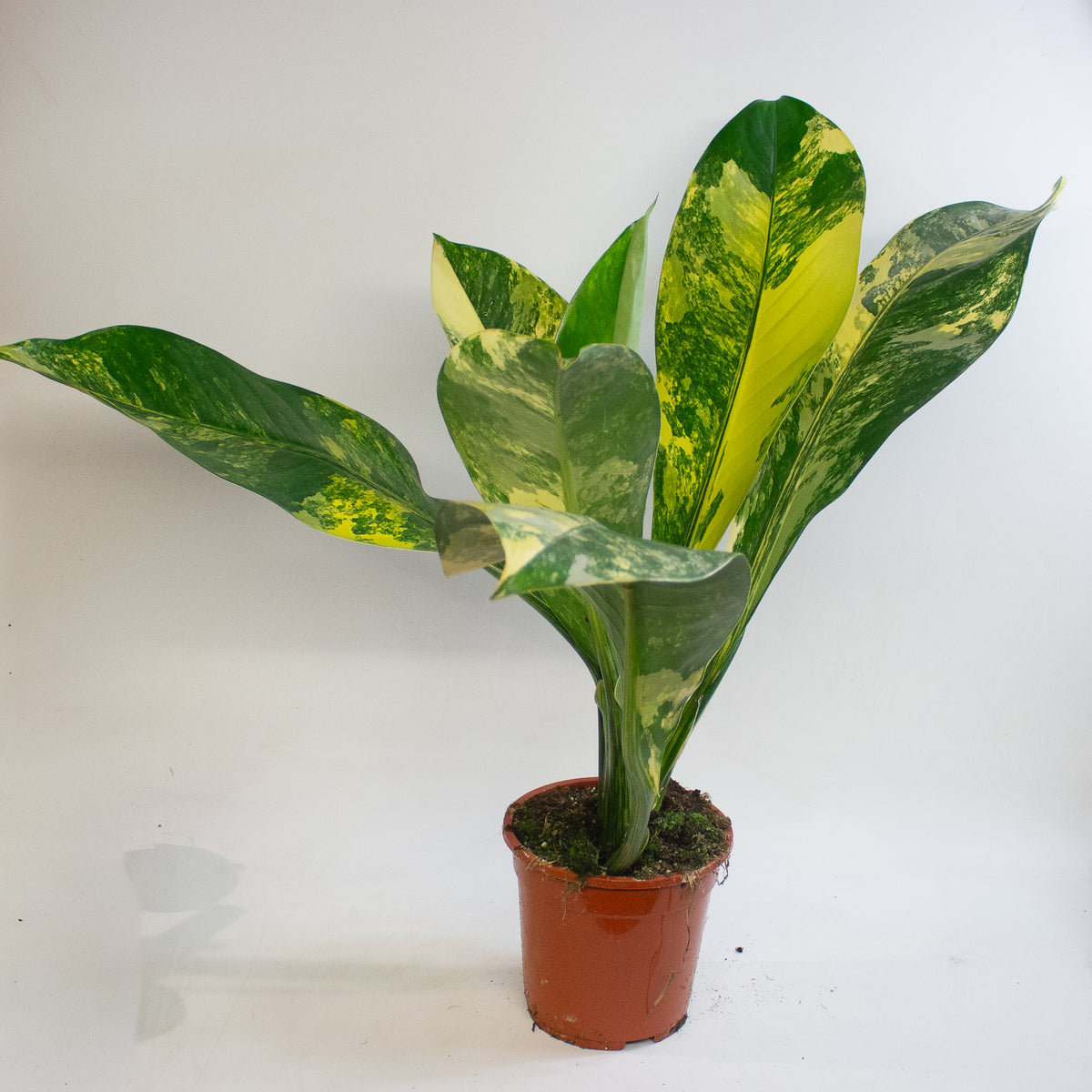
Dieffenbachia Big Ben 19cm H70 - 90cm

Dieffenbachia Big Ben 19cm H70 - 90cm

Regular price £168.00 GBP
Regular price Sale price £168.00 GBP
Sale Sold out
Taxes included.
Pot Size

Meet Dieffenbachia 'Big Ben'—a tall, bold foliage plant with broad patterned leaves and instant tropical height. It is a great statement option for a warm room, giving lush volume without needing the intensity demanded by rarer variegated aroids.

  • The Formal Name: Dieffenbachia 'Big Ben'
  • The Nickname: Big Ben Dumb Cane
  • Roots: A cultivated Dieffenbachia, part of the aroid family, grown for large variegated leaves and upright stems.
  • Natural Vibe: Warm tropical foliage conditions with filtered light, even moisture and high humidity if possible.

Care Guide

  • Care Guide:
  • Sunlight: Bright filtered light is best; it will tolerate medium light but may lose strength and pattern if too dark.
  • Best Room: A warm living room, office corner or bright hallway away from cold draughts.
  • Snacks: Feed monthly in spring and summer to support the large leaves.
  • Tropical Feels: Likes humidity; dry air can brown leaf edges.
  • Cosy Factor: Keep above 16°C, ideally 18–26°C.
  • Thirst: Water when the top few centimetres dry. Do not let the pot sit soggy.
  • Safety First: Not pet-safe – Dieffenbachia is toxic if eaten and can irritate skin and eyes; wear gloves if pruning.
  • The Bedding: Use a peat-free houseplant mix with added perlite for drainage.
  • Family Tree: Stem cuttings or cane sections can root in warm conditions.
  • Space Needs: Give it space around the leaves and rotate for even upright growth.
  • Speed: Moderate to fast in warmth and good light.
  • Uninvited Guests: Mealybug, spider mite and thrips can hide along stems and leaf bases.
  • Moving Day: Repot when root-bound or top-heavy.
  • Haircut: Remove yellowing lower leaves and cut leggy stems back carefully if needed.
  • Fresh Air: Avoid cold draughts but give normal room airflow.
  • Plant Lore: Dieffenbachia earns its common name “dumb cane” from its irritating sap, so it is best admired rather than handled casually.
  • View full details