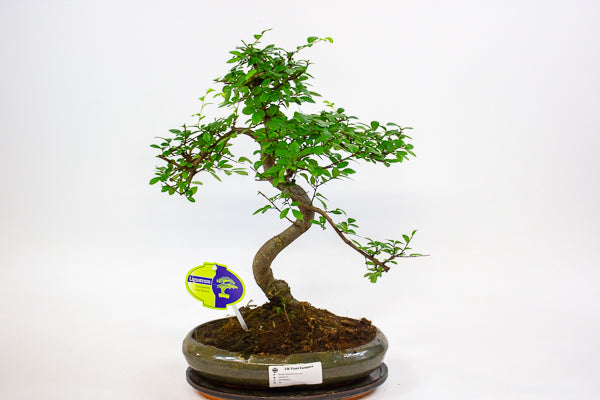
This mixed bonsai selection brings together four classic bonsai types—Ficus, Carmona, Ligustrum, and Zelkova—each with its own character and charm. From the glossy leaves and strong trunks of Ficus, to the dainty flowers of Carmona, the refined foliage of Ligustrum, and the elegant, fine-branching structure of Zelkova, this collection offers a beautiful range of textures and shapes. Perfect for beginners and enthusiasts alike, it’s an ideal way to start or expand a miniature indoor forest.
Full Botanical Name: Mixed genera bonsai including Ficus sp., Carmona sp., Ligustrum sp., and Zelkova sp.
Country and/or Region of Origin: Mixed origins – species and hybrids from Asia, Europe, and subtropical regions
Growing Conditions in Native Habitat: Typically grow as shrubs or trees in warm, temperate to subtropical climates with bright light, seasonal rainfall, and well-draining soils
Care Guide
Care Guide:
Light: Bright, indirect light is ideal. A few hours of gentle morning or late-afternoon sun helps keep the trees compact and encourages healthy growth. Avoid harsh midday summer sun behind glass which can scorch leaves.
Ideal Room: Bright living rooms, home offices, sunrooms, or windowsills with good light. In summer, they can be placed outside in a sheltered, bright spot (protected from strong wind and intense midday sun).
Feeding: Use a bonsai-specific or balanced liquid fertiliser every 2–4 weeks during spring and summer. Reduce to monthly or stop feeding in autumn/winter, depending on growth and indoor temperatures.
Humidity: Prefer moderate humidity (50–70%). Placing the pots on a pebble tray with water (without submerging the roots) or grouping plants together can help increase local humidity.
Ideal Temperature: 16–26°C for most indoor bonsai types. Avoid cold drafts, radiators directly underneath, or temperatures below 10–12°C, especially for Ficus and Carmona which are more tropical.
Watering: Keep the bonsai soil evenly moist but never waterlogged. Water thoroughly until it runs from the drainage holes, then allow the top layer of soil to begin to dry before watering again. Smaller bonsai may need watering more frequently, especially in warm, bright conditions.
Pet/Child Safe:Not pet/child safe overall — several genera in this mix (Ficus, Carmona, Ligustrum) are considered toxic if ingested and may cause stomach upset, irritation, or more serious symptoms in pets and children. Best kept out of reach in homes with curious animals or young children.
Soil Type: Bonsai substrate with excellent drainage and structure, such as a mix based on akadama, pumice, and lava rock or gritty bonsai compost. Avoid standard heavy potting soils which can stay too wet around the roots.
Propagation: Typically via stem/branch cuttings (Ficus, Ligustrum, Carmona) or layering and nursery-grown seedlings (Zelkova). Propagation is usually done by specialist growers rather than at home.
Eventual Height and Spread: Usually maintained at 20–50 cm tall depending on style and pruning; spread can reach 20–40 cm. Regular shaping keeps them miniature and in proportion.
Growth Rate: Moderate; Ficus and Ligustrum are faster-growing and need more regular pruning, while Carmona and Zelkova tend to be a little slower and more refined.
Pests and Treatment: Can be prone to scale, aphids, whitefly, and spider mites. Check foliage and branches regularly and treat promptly with insecticidal soap or a bonsai-safe systemic treatment. Improving airflow and avoiding overwatering helps reduce problems.
Repotting: Repot every 2–3 years in early spring before strong new growth begins. Refresh the bonsai substrate, lightly prune the roots, and re-secure the tree in its pot to maintain its miniature proportions.
Pruning: Regular pruning is essential—pinch back new shoots to maintain shape, shorten long branches, and remove any crossing or inward-growing branches. Occasional structural pruning wires or styles the tree into classic bonsai forms.
Air Purification: Good; small-leaved woody plants such as Ficus and Ligustrum help gently filter indoor air while adding a calming, natural focal point.
Folklore: Mixed bonsai collections are often associated with balance, patience, and mindfulness—the different species represent variety and harmony in nature, reminding the owner to slow down and appreciate detail.