Skip to product information
1 of 5

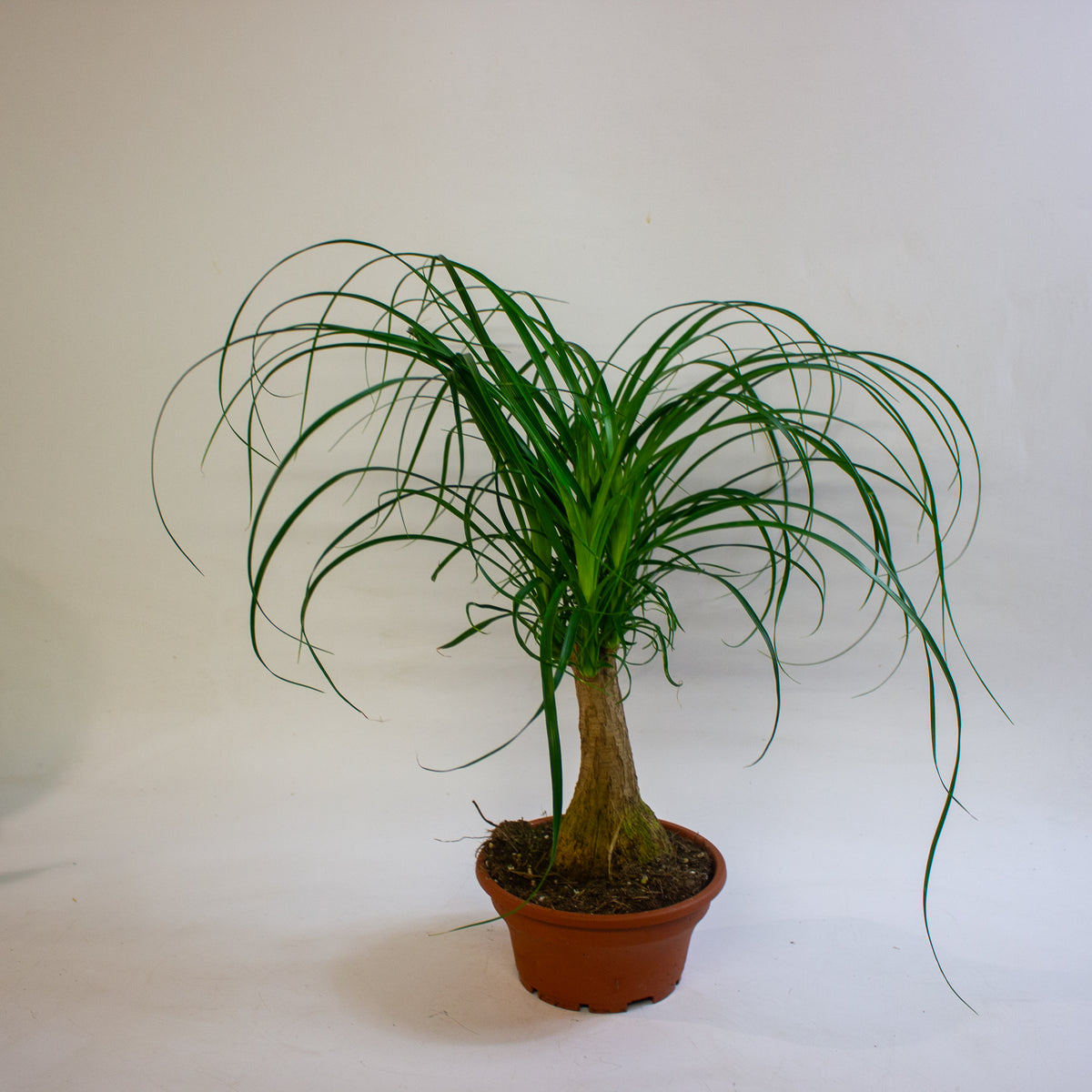
Beaucarnea recurvata 16cm H30cm

Beaucarnea recurvata 16cm H30cm

Regular price £41.00 GBP
Regular price Sale price £41.00 GBP
Sale Sold out
Taxes included.
Pot Size

Meet Beaucarnea recurvata—the playful desert-tree lookalike with a water-storing swollen base. A bulbous caudex supports a fountain of narrow, arching leaves, giving this slow-growing houseplant its wonderfully untidy ponytail shape. Despite the name, it is not a palm; it belongs to the asparagus family.

  • The Formal Name: Beaucarnea recurvata
  • The Nickname: Ponytail Palm / Elephant’s Foot
  • Roots: Native to Mexico, where a thickened stem base stores water between rainfall events.
  • Natural Vibe: Bright, dry open habitat with fast drainage and periods between watering.

Care Guide

  • Care Guide:
  • Sunlight: Very bright light and a few hours of direct gentle sunshine after acclimatisation; rotate for even growth.
  • Best Room: Sunny south- or west-facing living room, conservatory or bright office with good drainage.
  • Snacks: Very light cactus/succulent feed once or twice in spring and summer; avoid feeding in winter.
  • Tropical Feels: Comfortable in ordinary dry indoor air; do not increase humidity for this plant.
  • Cosy Factor: Thrives at normal warm-room temperatures and tolerates a slightly cooler winter if kept dry and frost-free.
  • Thirst: Let almost all the compost dry before soaking through and draining. The swollen base stores water; overwatering is much more dangerous than a short dry spell.
  • Safety First: Generally considered non-toxic to dogs and cats, but sharp leaf tips and fibrous edges can still irritate.
  • The Bedding: Very free-draining gritty peat-free cactus compost in a pot with a clear drainage hole.
  • Family Tree: Usually raised from seed; occasional basal offsets may be separated once established.
  • Space Needs: Slowly becomes a statement floor plant over many years; keep the swollen base above the soil line.
  • Speed: Slow, especially indoors; leaf tips are often the first sign of harsh conditions.
  • Uninvited Guests: Check for scale and spider mites along the long leaves; inspect roots if the caudex turns soft.
  • Moving Day: Repot sparingly as roots fill the pot; use a heavy container for stability without burying the trunk.
  • Haircut: Snip only dead leaf ends for appearance; never cut through the growing crown.
  • Fresh Air: Good airflow is welcome; avoid damp, cold, stagnant winter conditions.
  • Plant Lore: The swollen base is called a caudex and is the reason for the nickname elephant’s foot.
  • View full details